
This blog was co-authored by Latoya Brown, Associate and Ciaran Sheahan, Student-at-Law at Fasken LLP
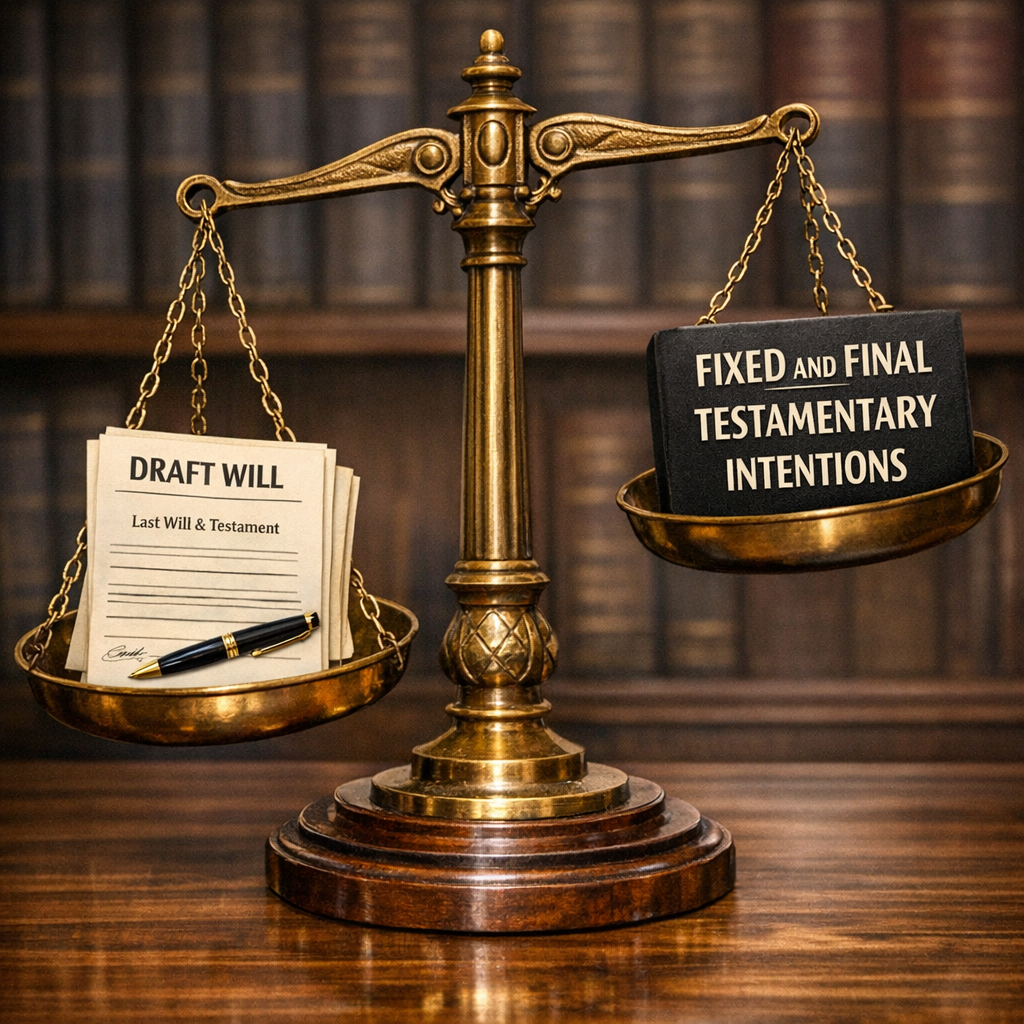
Ontario courts have, in recent years, considered a growing number of cases addressing the scope of their curative jurisdiction under s. 21.1 of the Succession Law Reform Act (the “SLRA”), following the amendment empowering them to do so. These decisions continue to refine the doctrine of substantial compliance and to provide clarity on what constitutes a document that embodies a testator’s “deliberate or fixed and final” intentions. The recent decision in Smith v. Bechtel et al., 2026 ONSC 975, is another addition to this developing body of jurisprudence, underscoring that the threshold remains meaningful, particularly where the document in question is a draft that has not yet been approved by the testator.
The Ontario Superior Court (the “Court”) was asked to determine whether an unsigned draft will prepared shortly before the deceased’s unexpected death could meet this standard. The application concerned the estate of Timothy Bechtel, who died unexpectedly of a heart attack in September 2024, twelve days after a lawyer prepared a draft will based on his instructions. At the time of Bechtel’s death, the will had not yet been executed. The deceased was unmarried, had no children, and was largely estranged from his siblings. Under the draft will, he appointed a former employee and close friend, as estate trustee and residual beneficiary, while also providing for a series of cash legacies to friends, nephews, and a charity. In contrast, if the draft will were not validated, the estate, valued at approximately $1.275 million, would pass on intestacy to his estranged siblings and extended family.
There was no dispute about the surrounding circumstances of the drafting process. The deceased met with an experienced lawyer, provided coherent instructions, and had the requisite capacity. A draft will was prepared in accordance with those instructions and sent to the deceased with a request that he review it and advise of any changes prior to a scheduled signing appointment. However, the deceased died before that review occurred. The sole issue before the Court was therefore whether the unsigned draft will could be validated under s. 21.1 of the SLRA as accurately reflecting the deceased’s testamentary intentions.
In addressing this issue, the Court determined that the central question is whether the document embodies a “deliberate or fixed and final expression” of the testator’s intentions regarding the disposition of their property upon death. This requirement reflects an important distinction: while a court may be satisfied that a deceased person had general or even strongly held views about how their estate should be distributed, those views must crystallize into a settled and final decision before the Court will give them legal effect. As the Court noted, expressions of intention alone are not sufficient; what is required is testamentary intention in the strict sense.
Applying that framework, the Court ultimately concluded that the draft will did not meet the statutory threshold. Central to that conclusion was the absence of any evidence that the deceased had reviewed or approved the draft. The lawyer’s covering letter specifically invited the deceased to review the document and suggest revisions, and the timeline for doing so had not yet expired at the time of death. This supported the inference that the draft was not intended to be final, but rather was part of an ongoing, iterative process.
The Court also placed weight on discrepancies between the draft will and a handwritten document found among the deceased’s papers. While both documents reflected a similar general scheme, including gifts to nephews, friends, and a charity, as well as the exclusion of siblings, there were differences in the amounts and in the named beneficiaries. These inconsistencies suggested that the deceased’s intentions were still evolving. As the Court observed, people do change their minds, and there was evidence that the deceased had done so at least once during the estate planning process.
In addition, the structure of the drafting process itself undermined the argument for validation. The lawyer had scheduled a follow-up meeting to allow the deceased to review and potentially revise the draft before executing it. This reinforced the conclusion that the document sent to the deceased was not intended to operate as his final will, but rather as a working draft subject to further input. In light of these circumstances, the Court was not satisfied on a balance of probabilities that the draft will represented the deceased’s fixed and final testamentary intentions, and the application was dismissed.
