
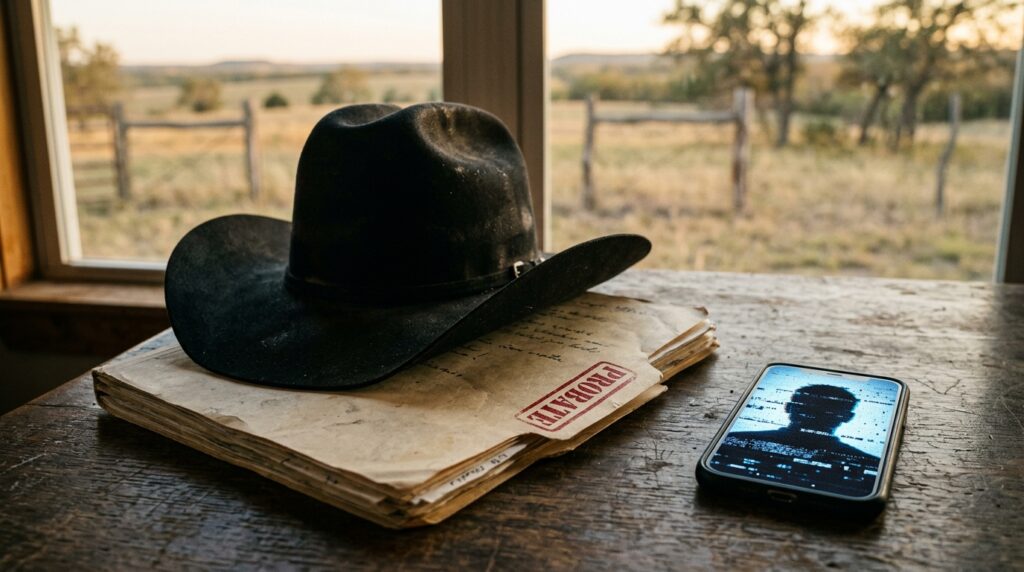
Who owns the name, the face, and the fake facts now.
Chuck Norris doesn’t make a Will. He informs his estate what will happen, and it happens.
That was the joke, anyway. The Chuck Norris facts began in the summer of 2005 on a website run by Ian Spector, with the “facts” submitted by visitors, and for twenty years they made one man’s toughness a piece of internet folklore. The real Chuck Norris died at his vacation home on the North Shore of Kauai on March 19, at 86, after a medical emergency. His longtime primary residence was the 1,000-acre Lone Wolf Ranch near Navasota, Texas, named for his 1983 film Lone Wolf McQuade.
Within days, the estate coverage was producing facts of its own. One widely shared headline promised his $70 million Will revealed. What followed was an unnamed insider saying Norris always meant his wealth to go to his wife and children, alongside an admission that the breakdown had not been disclosed. The $70 million is a Celebrity Net Worth estimate. No Will has been revealed, and no probate filing has been reported. Chuck Norris’s Will doesn’t need to be revealed. It reveals itself when it’s ready. For now, it is missing in action.
What can be said with confidence concerns the asset that is easiest to overlook and, for a man like Norris, may matter most: the name and the face.
He has fought this one before
On December 21, 2007, Norris sued Penguin Group and Spector in federal court in Manhattan over The Truth About Chuck Norris: 400 Facts About the World’s Greatest Human. He alleged that the book exploited his name and likeness without authorization for commercial profit, and that some of the “facts” were racist, lewd or showed him breaking the law. The book even thanked him for “playing along”. Part of his argument was that the title would lead readers to believe the facts were true.
The court denied his request for a temporary restraining order. He dropped the suit in 2008, and in October 2009 he co-wrote and endorsed The Official Chuck Norris Fact Book. Chuck Norris doesn’t lose lawsuits. Occasionally he withdraws one to give the other side a head start.
When a court would not stop the internet, he made the internet his licensee. After that, the persona appeared in World of Warcraft and in advertising for Toyota, UnitedHealthcare and World of Tanks. The joke became a business, and businesses outlive their founders.
What the estate actually owns
Because Norris made his home in Texas, the question of who owns that business now falls to Chapter 26 of the Texas Property Code. Chuck Norris doesn’t read statutes. He stares at them until they comply. Texas treats a deceased person’s name, voice, signature, photograph, or likeness as property for fifty years after death, provided it has commercial value. For Chuck Norris that condition is not in doubt. The right can be transferred in whole or in part by contract, trust, or testamentary document, before or after death. The likeness expires in fifty years. The roundhouse kick is presumably perpetual.
If his Will or a trust dealt with the right, it goes where he sent it. If not, the statute decides. With a surviving spouse and children, half vests in the spouse and half in the children, and only owners holding more than half in the aggregate can exercise the right on behalf of everyone. That default was written in 1987. It now governs a family that includes Gena O’Kelley, whom he married in 1998, and their twins Dakota and Danilee, born in 2001, along with Mike, born in 1962, and Dina, whom Norris first met in 1990, and Eric. On the statutory split, his widow holds exactly half, which is not more than half. She cannot license her husband’s face without at least one of his children agreeing. Only Chuck Norris can divide something six ways and still hold all of it. The statute is not so flexible.
Whether any of that applies depends on documents the public has not seen. A trust is private, and a Will may not have been probated yet. That is precisely why the default deserves attention: most families never find out what it says until they need it.
There is also a clock. For the first year after death, an owner can exercise the right only after registering a valid claim with the Secretary of State, although a court-appointed executor or administrator can also act in that window. The filingcosts $25, and a registered claim is prima facie evidence of validity and generally beats a conflicting unregistered one. Chuck Norris does not register with the Secretary of State. The Secretary of State registers with Chuck Norris. His heirs, less fortunately, have until March 19, 2027.
Code of Silence
For twenty years the facts insisted that nobody could fake Chuck Norris. The internet took that as a challenge. On April 1, the family said that AI-generated videos and posts were spreading false claims about how he died, his health history and who was present, including invented medical issues and false stories about family relationships. The best known was a fake funeral image showing Stallone, Schwarzenegger, Jackie Chan, Willis and Gibson gathered at a casket. The family’s remedy was an Instagram story asking people to “not believe or share” anything that did not come from them.
The inherited right is real, but it points elsewhere. It targets use of the likeness on products, merchandise or goods, or to advertise or sell them. It expressly permits use in a play, book, film, radio or television program, a magazine or newspaper article, or material that is primarily newsworthy. A fabricated video about a man’s final hours, posted for clicks, is not obviously a product. It looks a good deal more like the film the statute exempts. Texas considered closing that gap: a 2025 bill on digital replication rights in voice and visual likeness was left pending in committee and died. Chuck Norris can survive a committee. His bill could not. California took the other path, and since January 1, 2025 has given heirs a claim against anyone who distributes an unauthorized digital replica of a deceased person, with damages of at least $10,000. The same man, the same fakes, and a different answer, depending on which state he called home.
The official fact book
No Will could have stopped the internet. Norris learned that in 2008. What a Will can do is choose who holds the persona, so a family is not left governed by a statutory split. It can say what the testator thinks of AI replicas, commercial or otherwise, while he is still around to say it. It can tell the executor that the first-year filing exists. And it can give whoever holds the persona something better than a statute to go on: the testator’s own view of what his name should and should not be used for. Chuck Norris doesn’t have an executor. He has someone who carries out his orders. Everyone else should at least leave theirs some.
Most clients will never become a meme. Nearly all of them now leave behind enough photos, video and voice notes for someone else to make one. Norris answered the unofficial fact book by writing the official one. An estate plan is the same move, made in advance.
Chuck Norris doesn’t need an estate plan. Everyone he leaves behind does.
