
This blog post was written by: Dave Madan, Senior Manager, Scotiatrust
Most of us have a mental image of what a Will looks like. It is signed at the bottom, witnessed, maybe bound in a blue backing. It sits in a filing cabinet or a safe deposit box, and when the time comes, someone pulls it out and follows the instructions. Clean. Final. Done.
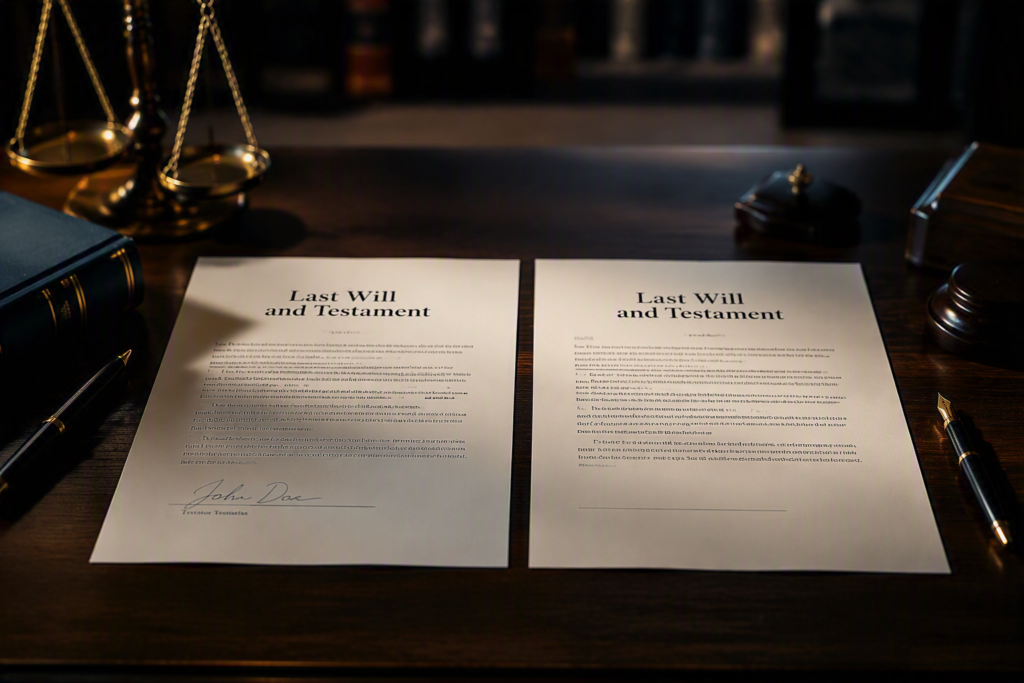
But what happens when there are two documents? One that was signed, and one that was not?
This is not a hypothetical. In a recent estate matter, a properly signed Will named a corporate fiduciary as executor and laid out a distribution plan. But there was also a later draft, prepared by a lawyer, that would have changed everything. Different executor. Different distribution. One close family member was set to receive significantly more under the newer draft, while gifts to others were reduced or removed entirely.
The catch? That newer draft was never signed.
Think of it like a renovation. You have approved blueprints for your house. Then you ask the architect to draw up a completely different layout, bigger kitchen, different floor plan, walls moved. The new drawings are sitting on the table, but you never signed off on them. Now someone has to figure out which version of the house to build. Except in this case, the homeowner is gone, and the family is left arguing over the blueprints.
The legal question at the centre of a file like this is whether an unsigned draft can ever be treated as a valid Will. In most Canadian provinces, a Will needs to be signed and witnessed to be formally valid. That is a basic rule, and for good reason. But the law has evolved. Several provinces now give courts the power to validate a document that was never formally executed, if there is enough evidence that it represented the deceased’s fixed and final testamentary intention.
That phrase, “fixed and final,” does a lot of heavy lifting. A draft the person was still thinking about probably does not clear the bar. A draft they treated as their definitive plan, where signing was just a scheduling issue, might. The difference often comes down to what the drafting lawyer’s file looks like. Were there notes? Instructions? Follow-up emails? Did the person say “this is what I want, I will come in Tuesday to sign,” or did they say “let me sleep on it”? Those two conversations lead to very different outcomes in court.
And the complications do not stop at the documents. In this particular matter, there was an already-deceased spouse whose own estate was still unfinished, cross-border elements, foreign accounts, retirement assets with their own beneficiary designations, and non-resident beneficiaries. Layer on family tension, and you can see how quickly things escalate.
One of the most practical problems in a file like this is not even “which Will governs?” It is “who has authority to act right now?” The older signed Will names one executor. The newer unsigned draft names another. The person named in the unsigned draft reportedly did not want the job. Meanwhile, the corporate fiduciary named in the signed Will was weighing whether to step in, step back, or ask the court for a limited role while the dispute played out.
This is where a temporary court-appointed administrator can make all the difference. Sometimes called an administrator pending litigation, this is someone authorized by the court to manage the estate on an interim basis. Their job is not to pick sides. It is to protect assets, gather information, deal with banks and institutions, and keep deadlines from slipping while the legal questions get sorted out. Think of it as a caretaker manager brought in to keep the team playing while the ownership group figures out who is actually in charge.
Notice matters too. Where a later document exists that could affect people’s entitlements, it is generally prudent to make sure everyone with a potential interest knows about it. That serves fairness, and it can also start limitation periods running, which ultimately helps move the estate toward resolution instead of letting claims hang in the air indefinitely.
So what is the takeaway for someone reading this who is not a lawyer or a trust professional?
Do not let a draft sit unsigned. If you have asked your lawyer to prepare a new Will, follow through. An unsigned draft is not a Will. At best, it creates ambiguity. At worst, it hands your family a lawsuit. If the person you have named as executor does not want the role, or has moved, or is not up to the job, update your documents. An unwilling executor helps no one. And if your plan treats family members unequally, that is absolutely your right, but understand that unequal distributions combined with document uncertainty is the single best recipe for litigation.
An estate plan is only as good as its execution. Not just the legal formality of signing and witnessing, but in the broader sense of seeing it through to completion. Book the appointment. Sign the Will. Confirm your executor. Review your beneficiary designations. The cost of getting it done is almost always a fraction of the cost of leaving it undone.
Because when the dust settles, the question your family should be asking is “what did they want?” Not “what did they almost do?”
